
Article
Construction Loans: What Builders and Developers Need to Know Before Applying in 2026
Ground-up financing with staged draws, interest reserves, and a defined takeout. How we structure construction loans and what to prepare.
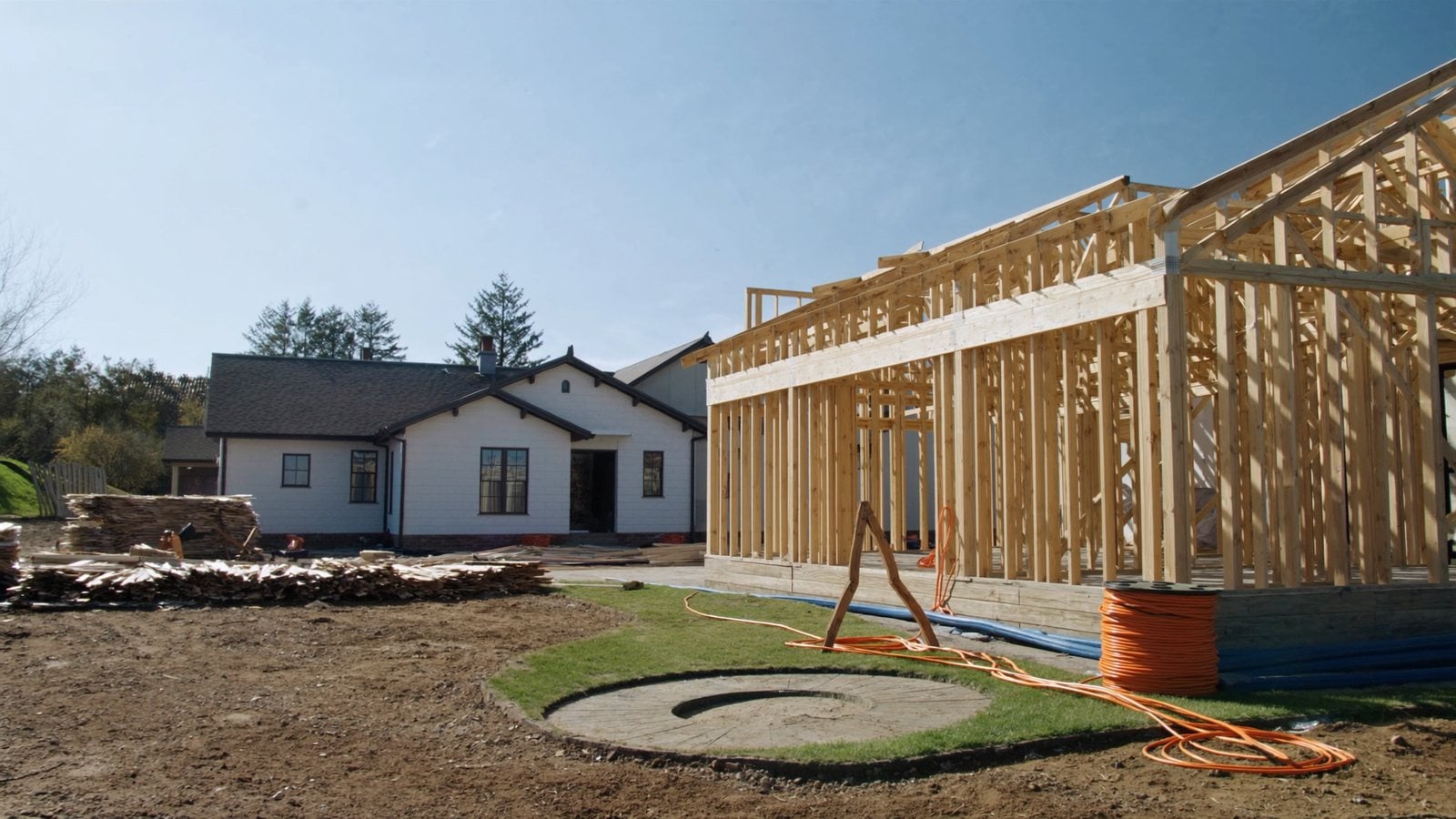
Ground-up construction loans work differently than fix-and-flip financing, with longer timelines and staged draws from initial funding through final takeout.
A subdivision developer needed to start work on 18 residential lots before the construction season. The traditional bank required 90 days and full personal recourse. With entitlements secured, a signed general contractor, and a detailed budget in place, the developer applied for construction financing and closed in 21 days with a draw schedule aligned to build phases.
Private construction loans are build-phase financing instruments with staged funding, interest reserves, and predetermined exit strategies built into the structure.
What you get: terms for ground-up and major new construction
| Term | What you get |
|---|---|
| Loan amount | $500,000 to $50,000,000+ |
| Max LTC | 75% to 90% on qualifying projects |
| Rates | Start at 9.99%, fixed, interest only |
| Origination fee | Typically 2% |
| Term | 12 to 36 months |
| Borrower | Business entity or trust |
| Guaranty | Non-recourse available on qualifying files |
| Prepayment | No penalties |
| Min credit score | 640 |
| Geography | Primary and secondary markets nationwide |
Interest-only payments during construction are crucial, since the property generates no income during the build. Payments are covered by the interest reserve, which is funded as part of the loan.
What the program focuses on
- Residential spec-build operators
- Subdivision developers
- Multifamily ground-up development
- Select mixed-use, office, retail, hospitality, and industrial projects
Projects involving renovation rather than ground-up development are a better fit for fix-and-flip programs. Transitional or lease-up scenarios align more appropriately with bridge financing.
The construction loan timeline: from close to takeout
| Phase | What happens | Typical timing |
|---|---|---|
| Underwrite & close | Budget, plans, and GC reviewed; loan closes | 14 to 30 days from full file |
| Fund interest reserve | Loan holds funds to pay interest during construction | At closing |
| Draw 1 | Site work, excavation, utilities | Month 1 to 2 |
| Draw 2 | Foundation, framing, rough-in | Month 2 to 4 |
| Draw 3 | Mechanicals, drywall, exterior | Month 4 to 6 |
| Draw 4 | Interior finish, final punch | Month 6 to 9 |
| Final inspection | Certificate of occupancy issued | End of construction |
| Takeout | Refinance into DSCR or sell the project | Month 9 to 36 |
Draws are not automatic. Each draw requires an inspection, a review of completed work against the budget, and verification that the project remains on schedule.
What to submit before applying
Construction loan files require more comprehensive documentation than fix-and-flip submissions, because underwriters evaluate the building process, not merely the finished asset. Submit all materials at once to prevent delays.
| Document | Why it matters |
|---|---|
| Detailed construction budget | Shows every line item, contingency, and soft cost |
| Plans and specifications | Defines the scope that the budget supports |
| Builder’s risk insurance | Required before first draw |
| General contractor contract | Locks in the GC, fee, and payment terms |
| GC license and insurance | Confirms the builder can legally perform the work |
| Permits and entitlements | Proves the project is approved to build |
| Appraisal or feasibility study | Supports as-completed value and exit value |
| Pro forma rent roll or sales comps | Shows how the loan will be repaid |
| Borrower entity docs | LLC, operating agreement, EIN |
| Personal financial statement / liquidity | Shows ability to cover overruns and carry costs |
| Bank statements | Confirms liquidity and cash flow |
| Exit strategy memo | Explains sale, refinance, or permanent takeout plan |
The budget receives the most intensive scrutiny. A budget that is missing contingency, underestimates soft costs, or relies on optimistic material pricing will get rejected or restructured.
How the draw schedule protects everyone
The draw schedule is the mechanism that keeps lenders from funding incomplete work while borrowers maintain adequate capital throughout construction. A typical draw sequence:
- Borrower submits a draw request with invoices and photos.
- Lender orders an inspection.
- Inspector confirms the percentage of work completed.
- Lender releases funds for completed work.
- Funds are often paid directly to the contractor or joint-payee.
- The process repeats at the next milestone.
Draws usually take 3 to 7 business days from request to funding. Delays happen when documentation is incomplete or the project falls behind schedule.
Hidden costs that kill construction deals
| Hidden cost | What it looks like | How to avoid it |
|---|---|---|
| Underestimated soft costs | Permits, engineering, and fees exceed budget | Use actual quotes, not rules of thumb |
| Missing contingency | A 5% contingency on a ground-up build | Budget 10% to 15% for residential, higher for complex commercial |
| Interest reserve shortfall | Construction runs long and the reserve runs out | Add 3 to 6 months of interest cushion |
| Draw delays | Incomplete draw requests stall cash flow | Submit invoices, photos, and lien releases together |
| GC payment disputes | Contractor is not paid on time and files a lien | Use joint-payee checks and lien releases at every draw |
| Exit failure | Project completes but cannot refinance or sell | Pre-qualify the takeout lender before breaking ground |
The number one reason construction loans fail is not the interest rate. It is a budget that was not honest about costs or a timeline that was not honest about delays.
Quick answers to real questions
How much can I borrow?
Loan amounts span from $500K to $50M and up. Project cost, as-completed value, and exit strategy determine the final loan size.
What is the difference between LTC and LTV?
LTC is loan-to-cost: the loan amount divided by the total project cost. LTV is loan-to-value: the loan amount divided by the completed or stabilized value. Construction loans usually lead with LTC.
Do I need experience to get a construction loan?
Experience matters significantly. First-time builders can qualify, but sponsorship track record, contractor strength, and project simplicity become increasingly important. Strong projects with weak sponsorship rarely close.
Can I use my own general contractor?
Yes, provided the GC maintains licenses, insurance, and financial stability. Lenders review the GC’s history, current workload, and payment practices.
What if my project goes over budget?
Borrowers cover overruns using personal or entity liquidity, or lenders may modify the loan if the project still supports exit value. This is why contingency and liquidity remain non-negotiable.
Is there a prepayment penalty?
No. Projects can be refinanced into DSCR loans or sold without penalty once complete.
How is this different from a fix-and-flip loan?
Fix-and-flip finances the acquisition and renovation of existing properties with short-term exits. Construction financing supports ground-up or major new development with staged draws over longer timelines.
When to apply and when to wait
Apply now if:
- You have a signed contract or owned land with entitlements.
- Your budget and plans are complete and reviewed by a contractor.
- You have 6 to 12 months of interest and carrying-cost reserves.
- Your exit strategy is pre-qualified or clearly achievable.
- You have a credible GC lined up.
Wait if:
- You do not have permits or approved plans.
- Your budget is based on estimates rather than contractor bids.
- You cannot show liquidity beyond the equity requirement.
- The project is a light renovation rather than ground-up construction.
- You have not confirmed the takeout path.
The 2026 market reality
Construction costs have stabilized in most markets but remain elevated compared to pre-2021 levels. Labor availability and permit timelines vary significantly by municipality. Developers closing construction loans in 2026 demonstrate:
- Locked contractor pricing or fixed-price contracts.
- Entitlements already in hand.
- Conservative as-completed values.
- Pre-qualified takeout financing or strong pre-sales.
- Liquidity to cover 15% to 20% of total project cost even when LTC is 90%.
A construction loan is a tool for execution, not a substitute for planning. If the project is well-budgeted, well-permitted, and well-sponsored, the loan can close in 2 to 4 weeks and support staged funding.
Ready to apply for a loan?
Start your application when you're ready, or talk with us first if you want help choosing the right loan.